


The challenge



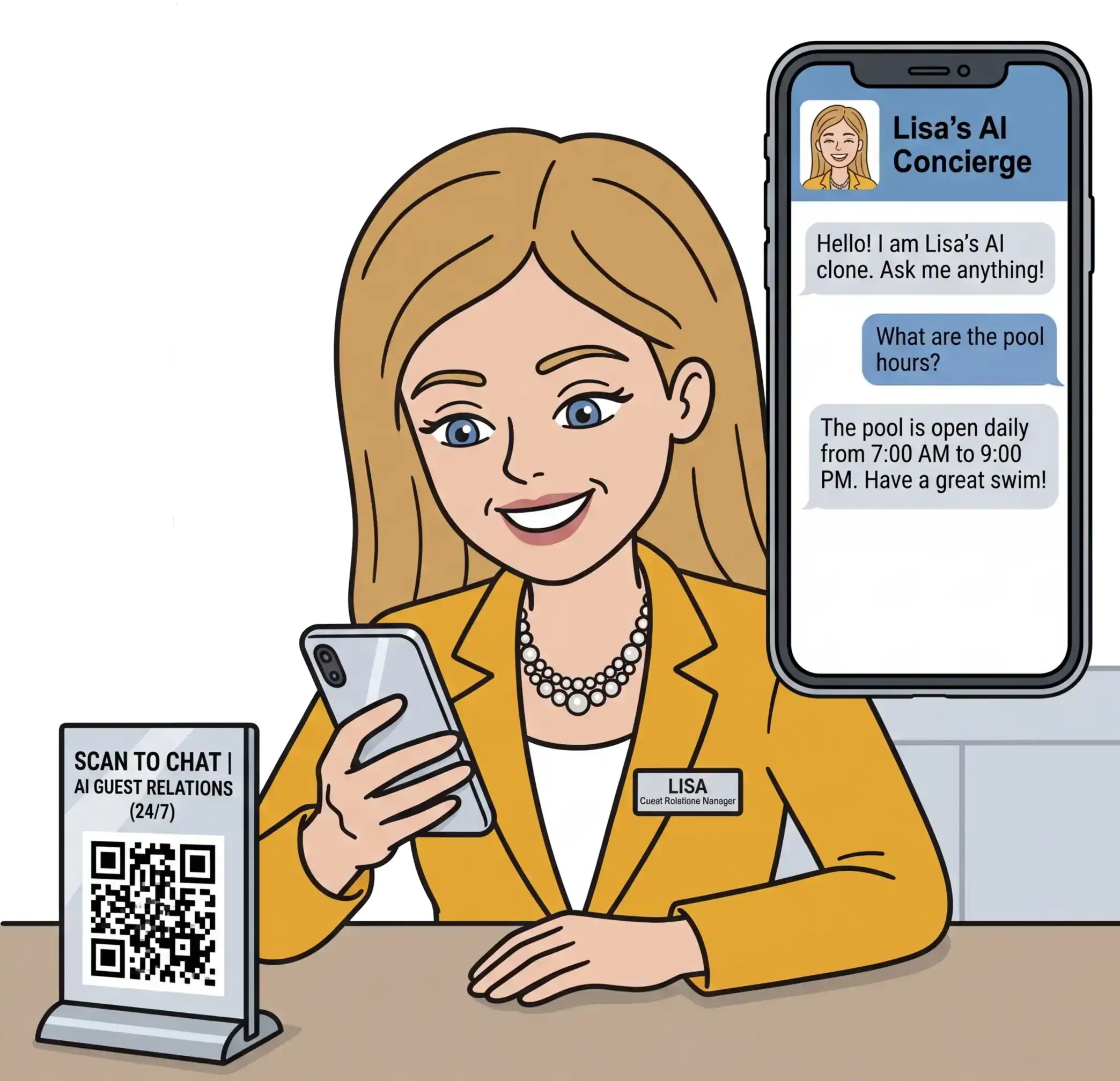
AI QR code guest directory that answers questions instantly, reduces front desk calls, improves guest ratings, and increases on-site revenue without printing.
 inHotel
We empower hoteliers to streamline operations, enhance efficiency, and elevate guest experiences through intelligent automation. Our AI-driven virtual assistants can be characterised like an AI-powered hotel operating system, tailored to hospitality. We combine industry expert knowledge and data-driven insights from the hotel systems that our agents can leverage to act like humans and support human teams in their roles. By automating routine tasks, optimizing workflows, and delivering personalized recommendations, we help hotels achieve 10X operational efficiency and a competitive edge. We support AI-powered direct relationships between guests and hosts, without unnecessary intermediaries and commissions.
inHotel
We empower hoteliers to streamline operations, enhance efficiency, and elevate guest experiences through intelligent automation. Our AI-driven virtual assistants can be characterised like an AI-powered hotel operating system, tailored to hospitality. We combine industry expert knowledge and data-driven insights from the hotel systems that our agents can leverage to act like humans and support human teams in their roles. By automating routine tasks, optimizing workflows, and delivering personalized recommendations, we help hotels achieve 10X operational efficiency and a competitive edge. We support AI-powered direct relationships between guests and hosts, without unnecessary intermediaries and commissions.

ROI
Skills extend AI assistants with new capabilities. Each skill is rated by difficulty, and assistant plans determine their learning potential. Below are the assistants able to learn this skill.
Yes. A QR-based, AI-powered guest directory replaces static printed folders with a simple, conversational interface that guests can access instantly on their phone. This matters because guest behavior has shifted from browsing information to asking direct questions in the moment. Instead of searching through a binder, guests ask what they need and get an immediate answer, in their own language. That shift reduces friction, increases engagement with hotel services, and avoids the delays and missed opportunities that come from relying on printed materials.
They are guest-facing systems that provide instant answers and support throughout the stay, typically via mobile chat without requiring an app download. The most effective solutions are built specifically for hospitality and sit on top of a hotel’s existing knowledge, policies, and SOPs. At a basic level, they reduce friction by answering common questions instantly. More advanced versions extend into request handling, service recovery, and personalization, which research shows can further increase satisfaction and revenue. The key distinction is that even simple self-service layers already improve response speed and reduce friction, while more advanced systems build on that foundation.
The most effective tools are AI guest directory solutions designed around real-time self-service. Guests think in questions like “What’s the Wi-Fi password?” or “Is the gym open now?”, and AI chat handles that instantly, 24/7. This matters because response delays are one of the main drivers of negative guest experiences, while instant answers significantly improve perceived service quality. In practice, these tools shift a large share of repetitive front desk interactions into immediate, automated responses, improving both operational efficiency and guest satisfaction.
Even on a small property, the value extends beyond printing savings. While removing printing, reprinting, and manual updates can save a modest amount on its own, the larger impact comes from improving guest experience and service visibility. Research shows that even a 0.1-point improvement in guest ratings can increase hotel profits by up to ~24% due to better pricing power and conversion. A digital guest directory contributes to that outcome by removing friction and helping guests engage with available services, which is why even conservative assumptions can translate into meaningful monthly value relative to a low fixed cost.
Yes, primarily because guests actually find and use what the hotel offers. When information is instant and easy to access, response times drop from minutes to seconds, which directly improves perceived service quality. Research shows that even small improvements in guest ratings have disproportionate financial impact, with a 1% increase in review score linked to roughly a 1.4% increase in RevPAR. By removing common in-stay friction and making services more visible, a digital guest directory contributes to higher satisfaction and incremental ancillary spend, even without complex upsell workflows.
Much easier than most hotel operators expect. This is not the kind of rollout that needs a six-month project plan and three outside consultants. A hospitality-focused setup can be live in a few hours. In practical terms, the bulk of the work is getting your core property information in order and placing QR codes in the rooms and public areas. That is it. No guest app download. No complicated behavior to teach guests. No need for your team to babysit yet another clunky admin portal full of duplicated content. The better systems are designed so the AI learns from your existing knowledge, SOPs, and policies. That makes implementation feel more like arranging the signage in your hotel than launching a new software department.
Because the smartest products are not rebuilding the whole tech stack just to answer breakfast hours. They use efficient architecture. In plain English, that means the heavy lifting is handled by a shared AI infrastructure, while the guest directory itself runs as a focused AI agent skill on top. That keeps the cost low without stripping out the useful parts. For a hotel, this matters because you are paying for a specific job to be done well, not subsidizing a bloated all-in-one platform packed with features most guests will never touch. That is how a guest directory skill can be priced at about €20 per month per property, while still delivering branded chat, multilingual answers, and a real operational return.
It should, otherwise you are buying yourself a new maintenance headache. Good hotel tech should reduce duplicate admin, not create another content graveyard that goes stale by next quarter. The better approach is an AI operating layer that learns from your existing knowledge base, SOPs, and policy documents, then applies that information as a guest service skill. So if your team already has breakfast hours, room service rules, spa access notes, and internal guidance documented on your website or in internal documents, that material can inform the guest experience without forcing you to rewrite everything. This is especially practical when you consider using a mixture of AI tools. Your staff keeps control of hotel knowledge, while the guest gets a cleaner, faster, mobile-first way to access it.
Start with the essentials: QR access, no app download, multilingual support, and fast, accurate answers in a mobile-friendly format. Beyond that, the key question is whether it improves the parts of the experience that actually drive guest ratings. Research shows that service quality and room experience are the primary factors influencing reviews, and response speed plays a major role in how service is perceived. A strong guest directory should therefore reduce response time, reflect your real operating knowledge, and make it easy for guests to find what they need without friction, rather than simply presenting static information in a nicer format.
Yes. A basic guest directory focuses on answering questions quickly and reducing friction, which already improves perceived service quality. More advanced systems add guest authentication, PMS integration, request handling, and service recovery workflows. This matters because research shows that resolving issues during the stay has a strong impact on final ratings and revenue outcomes. Many hotels start with a lightweight directory to improve access to information, then expand into more advanced capabilities as their operational needs grow.
No. While it is designed for hotels, the same QR-based AI directory works just as well across other accommodation types like resorts, camping sites, and vacation rentals. Anywhere guests ask the same practical questions, it fits naturally. Think check-in details, Wi-Fi access, amenities, house rules, directions, or how to book services. Instead of searching through printed materials or messaging hosts, guests scan a QR code, ask a question in their language, and get a clear answer in seconds. The setup stays simple, but the content and tone adapt to each property. A resort may highlight spa and activities, while a vacation rental focuses on house rules and local tips. The result is the same: fewer repetitive questions, smoother stays, and a better guest experience.
Put this skill to work in minutes on your assistant. Activate it now, or book a demo with the publisher for a guided walkthrough.