

Places - GERS Property ID & Location Intelligence
Property ID & Location Intelligence: map properties, POIs and AI agents for partner and traveler discovery with GERS. Geospatial grounding lets agents find and collaborate.




Property Mapping Nightmare

Our guests and partners land on the wrong place on maps. Reservations get misrouted, guest feedback is misattributed, and delivery suppliers keep showing up at the main entrance instead of the loading area. Every OTA and GDS integration becomes a costly mapping project that drains engineering time.
I lose sleep over missed revenue because our property does not appear correctly in AI searches, our AI agents are not discoverable, and they lack local awareness of what is next door. I am frustrated and overwhelmed having to babysit data inconsistencies.
I have evaluated hospitality silo ID registries, but I worry they will isolate us from the wider travel, transport, delivery and public services ecosystem. If we keep managing separate IDs per platform, we will not be ready for the AI era and waste time before we can fix the problem properly.
In the AI era, a business without a discoverable agent is as invisible as one without a phone number or website today.
GERS POI Mapping & Verification
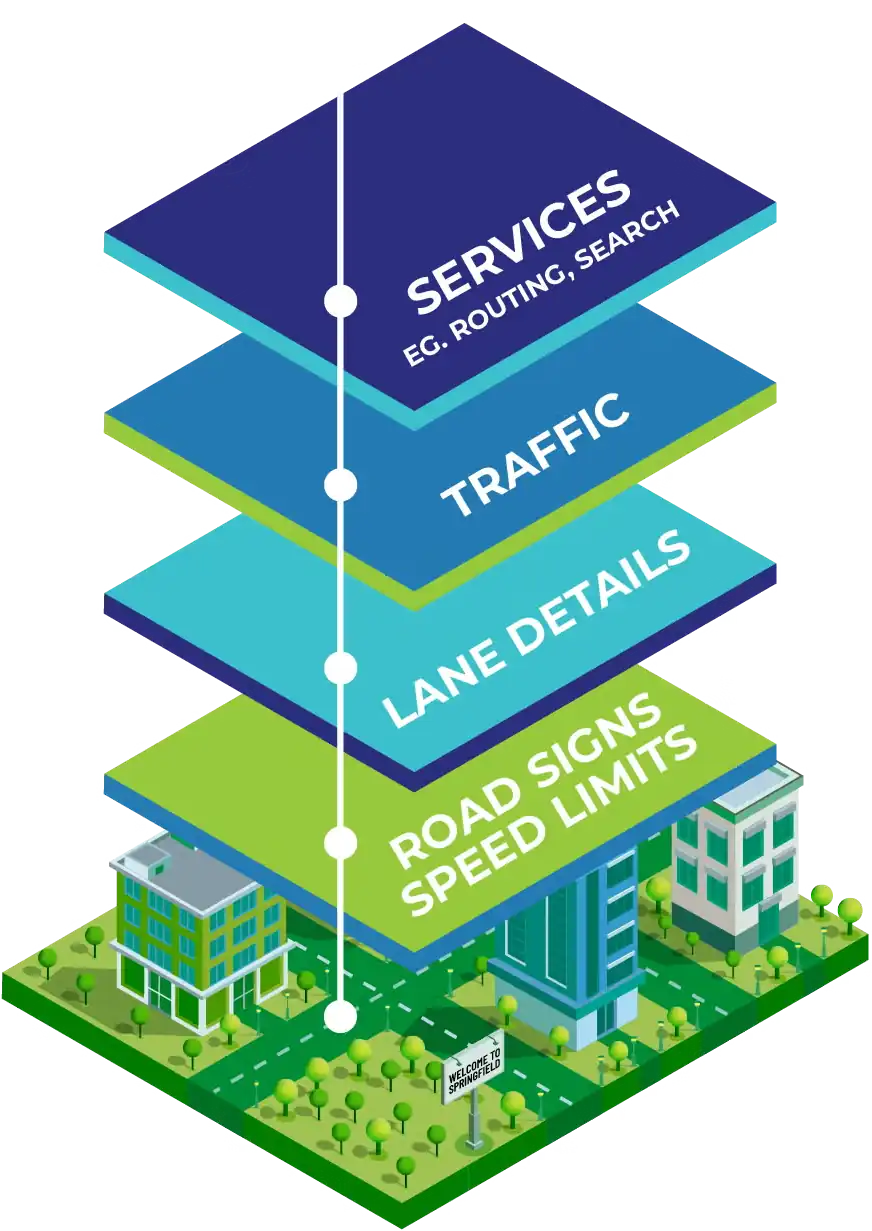
Imagine publishing a verified ID for every key Point of Interest (POI), such as the main entrance, service gate, spa door or car rental desk. These IDs are recognized across travel and hospitality platforms as well as by transportation, logistics and government agencies through the Global Entity Reference System (GERS) from the Overture Maps Foundation.
Map your existing property IDs to GERS so you interoperate with partners worldwide. Because GERS is global, open and free, everyone can interface with you confidently. Reservations route correctly, map pins point to the right spot, deliveries arrive at the proper entrance, and property records stay consolidated and authoritative.
GERS already powers place data used by over 3 billion people and adoption is growing rapidly.
Amazon, Esri, Meta, Microsoft, TomTom, Tripadvisor, and Uber have all moved or are moving to Overture and GERS.
Discover a wide range of travel and hospitality use cases GERS enables.
You don’t have to do this alone. inHotel leads partner engineering for the travel segment of Overture. We help you map each of your POIs to GERS, augment records with AI agent references, monitor for drift, and resolve discrepancies with AI-led mismatch workflows and human reviews.
GERS API with AI Agent Grounding
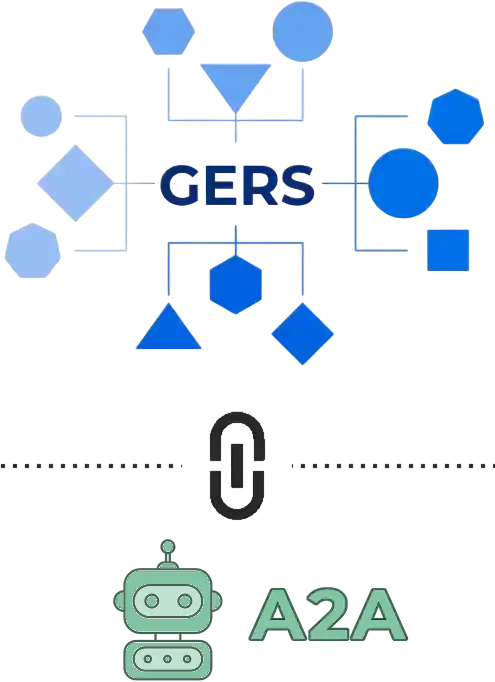
The GERS API provides access to Overture Maps place records enriched with A2A-compatible AI agent references. Your agents and other systems can retrieve, search, and filter canonical place data.
Grounded in their geospatial context, agents know the exact place they represent, resolve ambiguous queries, discover nearby partners, and refer guests to sister properties within your brand or collaborate with local partner businesses.
Key endpoints:
GET /places/{id}for fully expanded place recordsPOST /places/searchNearbyfor distance-sorted nearby searches by GERS ID or coordinatesPOST /places/queryfor global, filterable catalog queries
The result? More accurate answers, reliable recommendations and seamless integrations across maps, booking systems and partner platforms.
Conversational Destination Maps
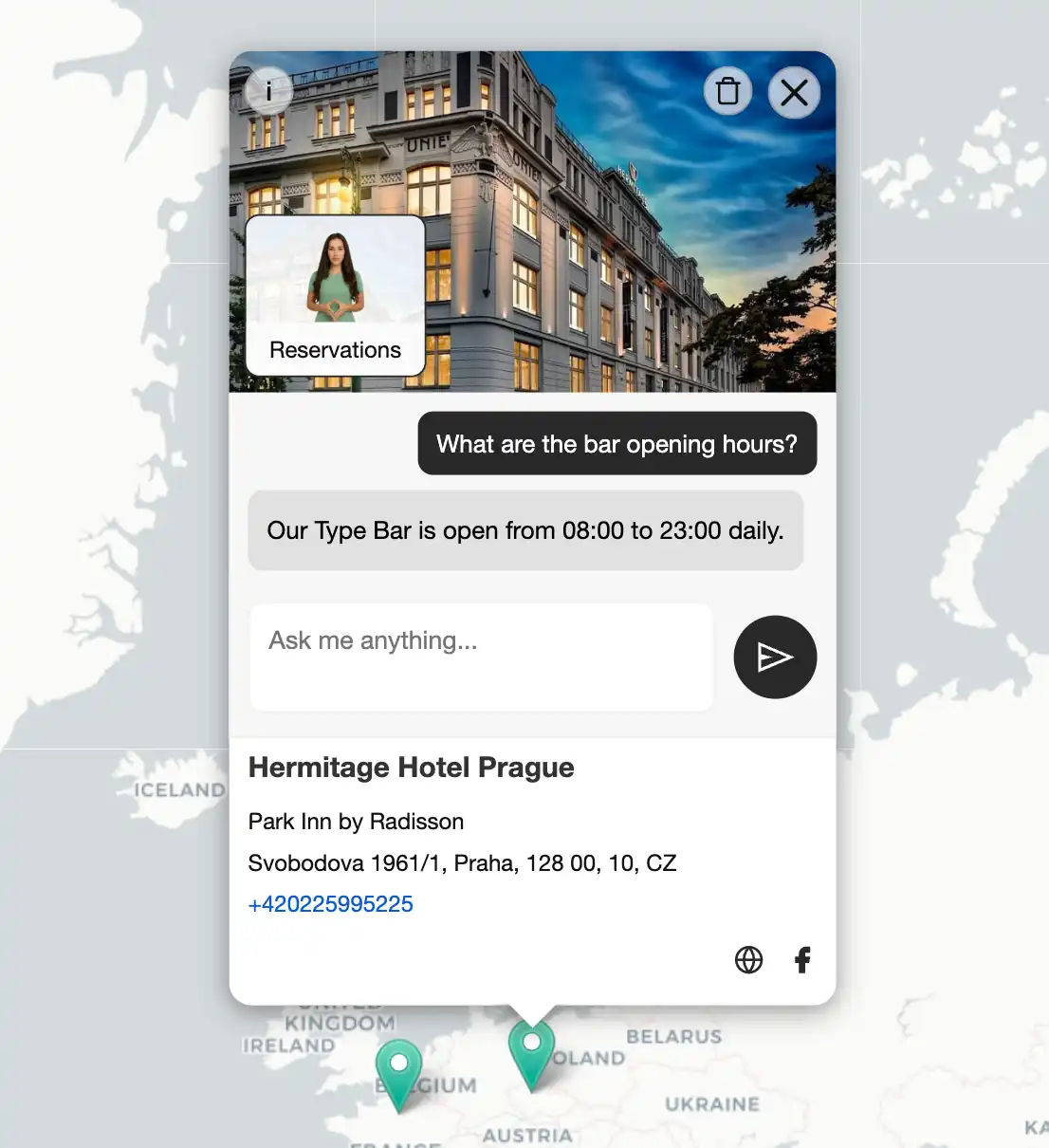
Imagine maps that connect travelers to verified partners and let guests chat directly with the business behind each marker.
You are able to present AI-augmented destination maps that recommend nearby options, route suppliers to the correct loading area, enable direct chat with venues and assisted discovery that drives great guest experiences and bookings.
See how your place appears in GERS
Find your property on the map and check its details like name, address, phone number and website. This is probably how your location appears in apps such as Uber, Tripadvisor and TomTom because they use the same open dataset.
If your place already has an AI agent, try asking it a live question like "Recommend an Italian restaurant nearby" or "Find me a car rental agency." to see how it discovers and refers local businesses. Don't yet have one? Get a free agent now.


Does anything look wrong or incomplete? Request a verification and we’ll arrange the correction.
Implementation
Quick, inexpensive adoption you can roll out one property or one destination at a time.
Provide your property or points of interest list and we verify and clean GERS IDs and POI mappings for you with AI and human review so your locations appear reliably on maps.
30 days for changes to propagate globally
Stand up agent(s) for verified places so your business can chat with customers across maps and other platforms. Agents are grounded, answer authoritatively, and drive bookings or referrals to sister properties within your brand or to local partners.
Add an interactive map and connect AI agents to the GERS API so they can initiate searches, discover and recommend nearby businesses by category, distance or agent role. This turns your maps and agents into proactive, conversational tools.
Why This Makes Sense
Low-cost direct bookings
Cut OTA commissions to 5-10%, lift revenue and asset value, with ROI 5× to 50× (depends on OTA mix, placements, and referrals).
Scalable impact
Deploy Olivia across dozens of travel websites to multiply exposure to guests while reducing subscription cost.
Build guest loyalty
Capture first-party guest data, personalize offers and loyalty incentives to significantly increase repeat stays and lifetime value.
Designed for humans & AI
Works with AI search platforms and guests’ personal agents while delivering a familiar booking-engine experience for travelers.
Centralized control
Manage Olivia’s knowledge, policies and pricing rules centrally and capture first-party guest data.
Pricing
inHotel Places includes three independent components:
1. GERS POI Mapping & Verification
2. GERS API with AI Agent Grounding
3. Conversational Destination Maps
Group plans available from 10 properties. Talk to us.
Frequently Asked Questions
What is GERS and who publishes it?
GERS is the Global Entity Reference System: an open, universal system of persistent identifiers for geospatial entities (places, buildings, roads, addresses) published by the Overture Maps Foundation. It is explicitly designed to be an open registry that makes joining datasets and onboarding data much simpler.
Does GERS only cover hotels and lodging properties?
No. GERS covers all geospatial entities across industries - everything from buildings and roads to places used by automotive, logistics, urban planning, local search, and more. That broad scope is exactly what allows hotels, restaurants, golf courses and wellness centers to interoperate with car rental systems, mapping platforms, public administration datasets and many others.
Is GERS production-ready for hotel use now?
Yes. Overture published GERS with documentation, tooling and bridge files that let organizations join their existing records to GERS IDs via a single-column join, which is exactly the practical onboarding pattern hotels and vendors need. That means hotel tech stacks can begin mapping to GERS immediately.
Can GERS bridge or extension layers preserve the hotel’s “authoritative source of truth”?
Yes. You can maintain an authoritative hotel registry or internal record and publish pointers that map that record to the GERS ID for the physical place. That keeps your control of the authoritative data while gaining universal joinability with all other datasets that use GERS. Overture explicitly supports bridge files and linking patterns for this purpose.
Is GERS open and free to adopt?
Yes. GERS is part of Overture’s open map data initiative and is released as open data with published documentation and datasets. That openness eliminates licensing friction and vendor lock-in that can arise from closed or paid registries.
What requirements do hotels have for permissions and privacy as related to a unified property ID?
Permissioning and privacy controls are orthogonal to the existence of a global ID. The right pattern is to use GERS as the neutral identifier while implementing access control, privacy-preserving pointers, authentication and consent at the layer that holds the sensitive data. That model avoids duplicating identifiers while keeping private data protected under your governance.
How does GERS help with AI and trustworthy data pipelines?
AI systems need deterministic identifiers to ground facts to the right real-world assets. GERS supplies persistent IDs and changelogs, making it easier to trace, audit and bind data to a place. That improves data retrieval accuracy, auditability and reduces the risk of AI making inconsistent or fraudulent inferences about properties.
What practical steps should a hotel or a hospitality tech vendor take today to benefit from unified property IDs?
Hospitality companies should map their internal property records to GERS IDs using Overture’s bridge files. For hospitality-specific needs, build a metadata layer that references GERS IDs rather than issuing an alternative global identifier. That gives immediate interoperability and keeps future integration costs low.
How can I obtain a global, persistent ID for my hotel?
Use a GERS ID from Overture Maps' Global Entity Reference System, an open worldwide registry of persistent place identifiers that works across mapping, distribution, payments, public datasets and AI pipelines; GERS IDs have already been assigned to a vast number of places, so in many cases your property already has one and you only need to look it up in the GERS dataset. You can self-serve with Overture’s datasets and documentation, have a developer join your records using GERS bridge files, or if you are an inHotel customer, inHotel will map and verify your property's existing GERS ID at no charge.
Does my hotel already have a globally unique property ID?
Yes. Most hotels already have one or more globally unique identifiers: GERS has preassigned IDs for a vast number of places, including bed and breakfasts, hotels, hostels, lodges, golf courses, guesthouses, motels, resorts, serviced apartments and many vacation rentals. Other global systems that likely include IDs for your property are Google Maps (Place IDs) and OpenStreetMap (OSM) IDs. GERS aggregates place data from multiple sources and is purpose-built as a free, open, universal place identifier that supports interoperability both inside and outside hospitality. You can discover your GERS ID in the Overture Maps Explorer (https://explore.overturemaps.org) or by using inHotel’s GERS discovery and management tools.
How can hotels or travel operators reliably manage property IDs and POIs?
The practical path is to adopt GERS IDs as the canonical identifier for each property or point of interest, then use an API that exposes those IDs for lookup, search and synchronization. GERS gives you stable, open IDs for places across releases so you can join your own data and partner feeds reliably. inHotel’s GERS API lets you query places by ID, location area, category or brand, then store that GERS ID as the shared key in your system. That way, every integration points to the same place, rather than juggling dozens of partner specific codes.
How can travel suppliers in a destination connect their AI agents to work together?
If every hotel, restaurant, airport, tour operator or car rental in a destination is associated with a GERS ID, their AI agents can use those IDs as a shared reference for "this exact place." inHotel’s location intelligence service lets each supplier register agents against the GERS place record and then use an API to query other agents around that location by role, such as Reservations, Concierge, or Rental Sales Agent. This allows an AI concierge for a hotel to discover and collaborate with nearby suppliers' agents, coordinate recommendations or bookings, and still keep each company’s logic and policies separate, all anchored on a common, open place ID.
How can I use a GERS API to ground my hotel or travel AI agents in the real world?
Grounding an AI agent means tying its knowledge and actions to concrete entities like your hotel, outlets and nearby POIs. With GERS, each of these entities has a stable ID that persists across data releases and partners. Using inHotel’s GERS API, you can fetch the canonical place record for your property, enrich it with your own metadata, and expose that to your AI assistants as the single source of truth. The same API can then be used to search nearby places for recommendations, resolve partner codes, and attach agent profiles, so your AI behaves consistently and context aware across channels.
As a restaurant or hotel owner, can I expose my AI agent on a map so that people can ask it frequent questions, such as those about opening hours, menus, availability, services, or prices?
Yes. You can expose an AI assistant for your restaurant or hotel on the map so people can ask common questions. Using GERS-backed place records makes the agent discoverable across platforms while keeping the source of truth with you: you decide what the assistant can answer and whether it can perform transactions such as bookings. inHotel can help map your place to a GERS ID, register an agent endpoint and connect it to your systems for authoritative data. If you want help getting started, we can set up a basic FAQ assistant for free or scale it into a fully featured concierge that integrates with your booking and other systems.
Ready to put your AI agents on the map?
Reach out today to learn the details and explore how our solution can benefit your property.