The AI Hotel Operating System of the Future
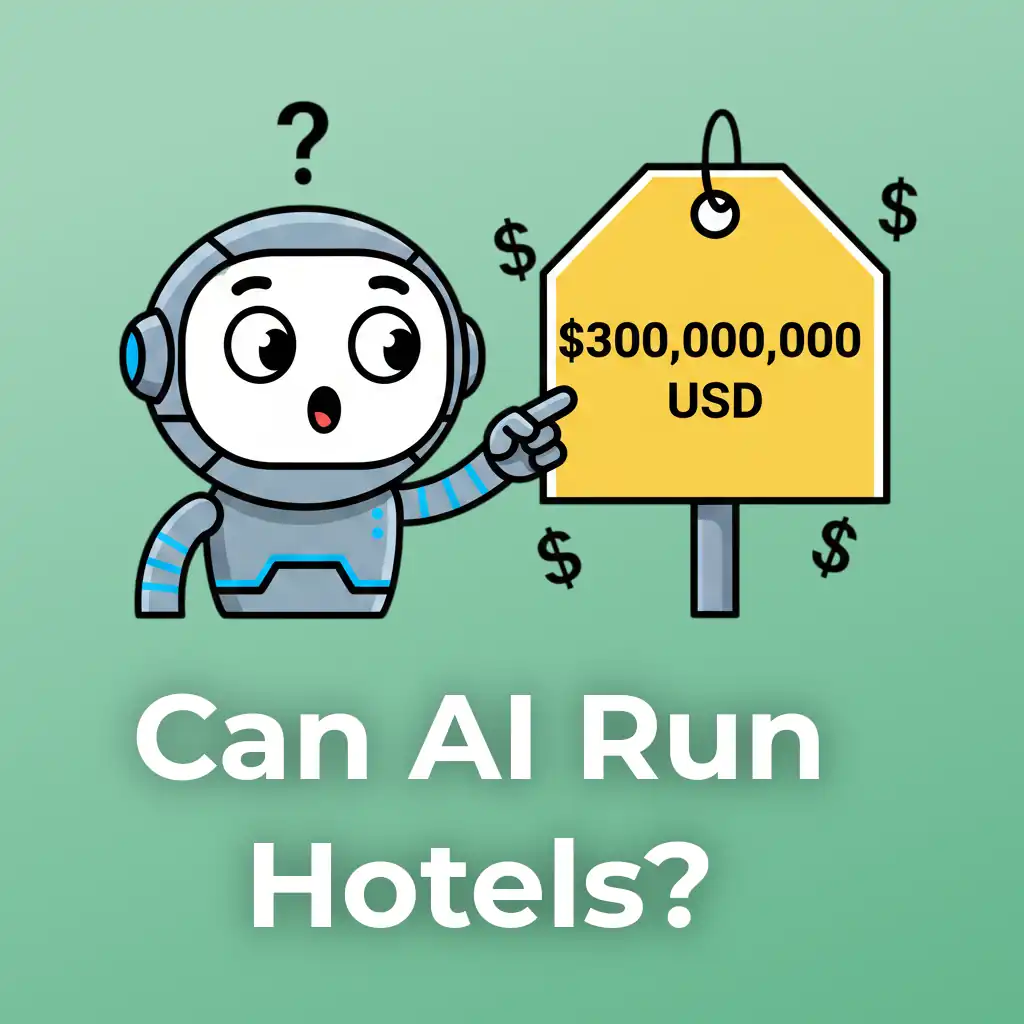
Analyzing the shift toward the AI Hotel Operating System, we explore how $300M MEWS funding validates an agentic future powered by expert orchestration.


Overview
Last week’s news that Mews raised $300 million to build agentic AI for hotel operations confirms something we at inHotel have recognized for a long time. The hospitality industry understands the potential of moving beyond dashboards, manual workflows, and siloed AI tools toward truly autonomous operations.
This announcement frames the future as a challenge of better coordination across pricing, staffing, and service delivery. While that is a piece of the puzzle, we believe the core issue goes much deeper. AI represents more than an incremental improvement to existing workflows; it is an opportunity to rethink the "problems behind the problems." Rather than simply making a flawed process faster, we have the chance to transform how hotels function by addressing the underlying challenges of efficiency and service at their root.
Current systems are fundamentally passive and require people to operate them. In an industry facing chronic staffing issues where teams are often stretched thin and managing high attrition, streamlining existing technology isn't the answer. The real challenge is that today's technology does not solve the underlying problem of human dependency.
A New Standard for Intelligence
At inHotel, we believe the future of hospitality depends on systems that operate at a higher, process level, blending naturally with the people on the ground. For about two years, we have been building toward a reality where technology actively contributes to the steps within standard operating procedures (SOPs) and makes informed decisions on its own, yet remains fully aligned with the business objectives and guardrails set by management.
Operations should no longer be prone to avoidable human errors or rely entirely on manual labor to function. Instead, technology should act as an intelligent layer that executes routine tasks with professionalism. This approach allows humans to focus on the guest experience while the system handles the operational heavy lifting.
Execution Over Headlines
While massive funding rounds validate the market's direction, inHotel has been focused on practical, inclusive execution. Our vision is to provide an intelligence layer that connects the systems hotels already use, turning them from passive tools into active participants.
We understand that for too long, hospitality tech has been trapped in a "pay-for-play" bubble, where mediocre technologies often come with hefty price tags simply for being "industry-specific." By understanding both the hospitality landscape and the capabilities of general tech, we see the shift to AI as a long-overdue opportunity for hotels to break out of this vacuum and access the wider world of open-source and general-purpose software.
Hotels already possess a wealth of knowledge from experienced department heads and deep operational playbooks. The problem is that this expertise is fragmented, trapped in thought leaders’ brains, or buried in siloed manuals. We are building the bridge that allows this knowledge to work in real time, delivering high-performance solutions that are effective, transparent, and fairly priced.
An Open Economy of Teachable Skills
Our platform is intentionally designed as an open system rather than a closed box. We are building agentic infrastructure where industry experts can contribute their specific capabilities as teachable skills for AI agents.
This creates a new agentic economy where experts are incentivized to participate rather than fear replacement. By teaching their unique workflows and strategies to the system, they ensure their expertise is actionable at scale. In this model, no tech company prescribes how a hotel should run. Technology remains the enabler of operational management creativity, efficiency, and effectiveness.
Orchestration Is the Priority
We believe that the industry can achieve autonomous operations without a total, expensive reinvention of the current tech stack. For PMS providers and operators who want to evolve and leverage AI without migrating platforms or locking in to any single technology vendor, orchestration is the key.
The goal is to provide the glue that connects existing systems and turns institutional knowledge into operational behavior. When pricing, staffing, and service delivery work together without constant human intervention, the business becomes resilient.
Scaling for the Real World
Because we focus on connection rather than replacement, the path to autonomous operations is accessible today. We echo the intention to begin by developing co-pilots for staff. We have followed the same thought process and agree that starting with co-pilots is a great way to drive adoption as teams gain confidence working alongside AI.
We have already built AI agents trained specifically for hotel operational roles. These agents are fueled by a global knowledge base where industry experts contribute best practices. This library, which already comprises over 25,000 artifacts and grows every day, serves as an operational "brain" that can empower any agentic system to act with precision.
These agents are designed to complement human staff, filling the gaps left by labor shortages and preventing the friction that usually leads to human overload. Our approach is partner-friendly and works alongside existing PMS systems. This allows owners to see immediate operational relief without the risk and cost of a full platform migration.
The Future is Collaborative
The question is no longer whether AI can run hotel operations, but how we can build a system that finally connects and supports the people in hospitality.
For hotel groups looking for operational relief without the risk of a platform migration, and for PMS providers who want to offer agentic capabilities to their customers today, orchestration is the fastest path forward. If you believe hotel automation should be active, intelligent, flexible, and grounded in real operational expertise rather than closed systems, we should talk.
Frequently Asked Questions
What does an AI operating system for hotels actually do?
An AI operating system for hotels goes beyond dashboards and analytics by actively participating in daily operations. Instead of requiring staff to manually trigger workflows, it can execute routine tasks, coordinate across systems, and make decisions within predefined guardrails. inHotel’s solution acts as an intelligence layer that plugs into existing hotel technology and SOPs, allowing AI agents to assist or autonomously handle operational steps such as task routing, service execution, and coordination between departments. The result is fewer handoffs, reduced human error, and more consistent operations without replacing the existing tech stack.
How is AI orchestration different from traditional hotel automation tools?
Traditional automation tools focus on isolated workflows, such as housekeeping schedules or pricing rules, and still depend heavily on human oversight. AI orchestration connects multiple systems, teams, and knowledge sources so they can work together in real time. inHotel’s approach uses AI agents trained in hotel operational roles to orchestrate actions across PMS, service tools, and staff workflows. This allows operations to run as a coordinated system rather than a collection of disconnected automations, which is critical for scaling without adding complexity.
Can hotels use AI for autonomous operations without replacing their PMS?
Yes. Hotels do not need to replace their PMS to benefit from AI-driven operations. inHotel’s solution is designed to work alongside existing PMS platforms as an orchestration layer. It connects to current systems and turns them from passive tools into active participants in operations. This allows hotel groups and owners to adopt AI gradually, reduce risk, and see operational improvements without undergoing a costly and disruptive platform migration.
What role does hospitality expertise play in an AI operating system?
Hospitality expertise is essential. AI systems are only as effective as the operational knowledge they are trained on. inHotel’s platform allows industry experts, consultants, and experienced operators to contribute their workflows and best practices as teachable skills for AI agents. This ensures that AI behavior reflects real-world hotel operations rather than generic assumptions. It also creates an incentive for experts to participate, since their knowledge becomes actionable and scalable instead of locked in manuals or individual experience.
How can AI help address staffing shortages in hotels?
AI can reduce dependency on manual labor by handling routine operational tasks and decision-making. In environments with high attrition and limited staff availability, this is critical. inHotel’s AI agents are trained for specific hotel operational roles and can support teams by coordinating tasks, preventing overload, and ensuring consistency. This allows human staff to focus on guest experience while AI manages the operational heavy lifting, helping hotels maintain service quality even with lean teams.
Is it possible to start with AI co-pilots before moving to full autonomy?
Absolutely. Starting with AI co-pilots is often the most effective adoption path. inHotel follows this approach by deploying AI that first assists staff with recommendations and task coordination. As teams build trust and confidence, these systems can gradually take on more autonomous execution. This phased model reduces resistance, improves usability, and ensures that AI aligns with business objectives before expanding its level of autonomy.
How does an open AI system benefit hotel tech vendors and partners?
An open AI system allows vendors and partners to plug in their capabilities rather than compete with a closed platform. inHotel’s solution is designed as agentic infrastructure, not a monolithic product. PMS providers, technology vendors, and consultants can complement the system with their own tools and expertise. This partner-friendly model enables faster innovation, shared value creation, and avoids locking hotels into a single vendor’s ecosystem.
What kind of knowledge powers AI agents in hospitality operations?
Effective AI agents rely on structured operational knowledge, not just data. inHotel’s agents are powered by a growing global knowledge base of hospitality best practices, SOPs, and expert-contributed artifacts. With over 25,000 operational assets already in place, this library allows agents to act with precision and context. This approach transforms institutional knowledge into real-time operational behavior instead of static documentation.
Do hotels need massive investment to adopt AI-driven operations?
No. Hotels and tech providers do not need massive funding rounds to implement AI orchestration. The key is connecting existing systems and expertise rather than rebuilding everything from scratch. inHotel’s approach focuses on providing the glue between tools, knowledge, and workflows. This makes AI-driven operations accessible, scalable, and cost-effective, especially compared to closed systems that require large capital investment and long implementation cycles.
How can PMS providers add AI capabilities without building everything internally?
PMS providers can partner with an AI orchestration layer instead of developing a full agentic system themselves. inHotel’s solution integrates with PMS platforms and provides AI agents trained in hotel operations, allowing providers to offer advanced AI capabilities quickly. This partnership model enables PMS vendors to stay competitive, deliver immediate value to customers, and avoid the time, cost, and risk of building complex AI infrastructure in-house.