When Guests and Hotels Start Talking Through AI Agents
Guests and hotels speak through AI agents. Hoteliers must structure their content and intelligence so trust, loyalty, and value translate before humans engage.


Background
Something big is changing in hospitality, and it is not “AI features” or shiny automation.
What is changing is who speaks for the guest, and who speaks for your hotel.
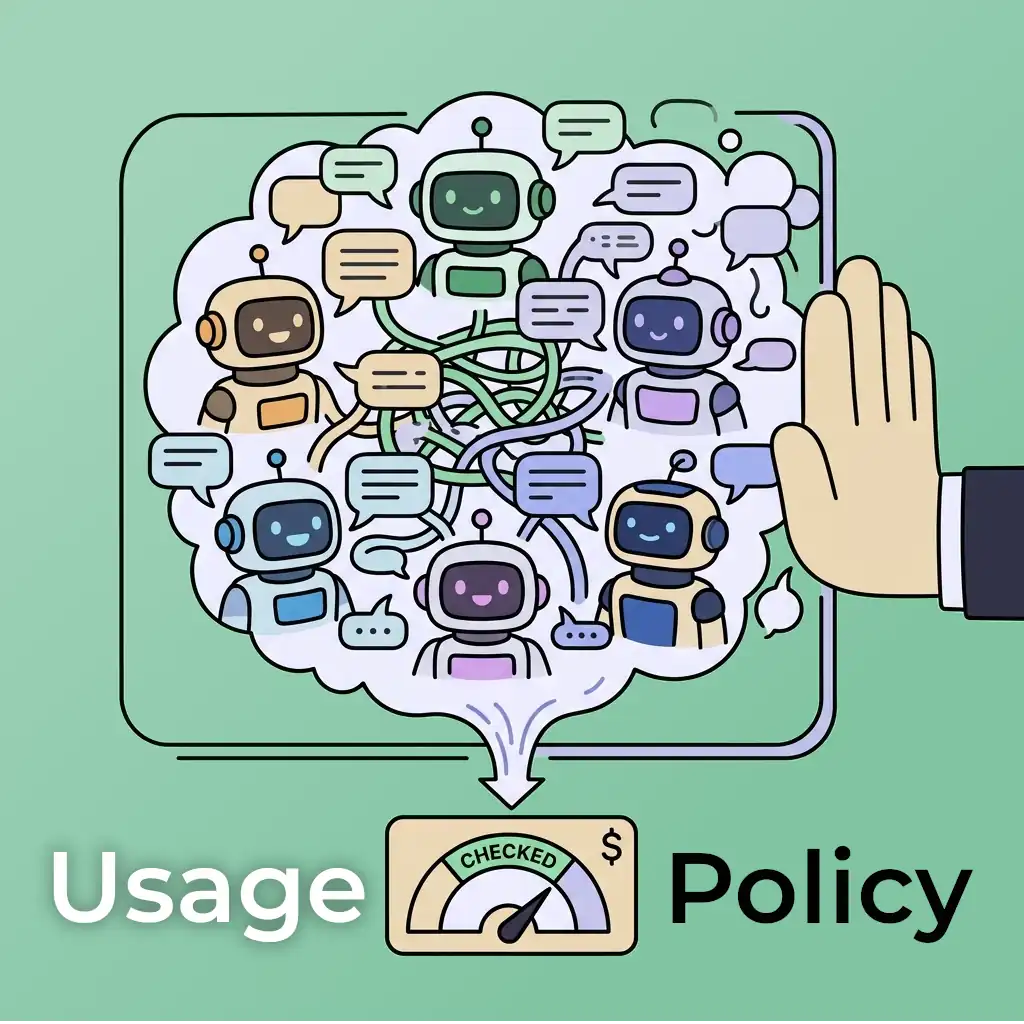
More and more, guests will be represented by AI agents. Assistants that search, compare, decide, and even book on their behalf. At the same time, hotels and hospitality products will also be represented by agents. Systems that explain offers, interpret policies, express brand promises, and negotiate value.
That means the guest relationship is no longer just human to human. It is agent to agent, with trust, context, and intent flowing through machines before a human ever sees a screen.
For hospitality, this matters more than almost any other industry.
Hotels do not sell widgets. They sell experiences, expectations, and emotional outcomes. When discovery and booking become agent-mediated, the question is simple but uncomfortable:
Can your hotel be correctly understood, trusted, and chosen by a machine acting for your guest?
This Is Not a Tech Question. It Is an Intelligence Question.
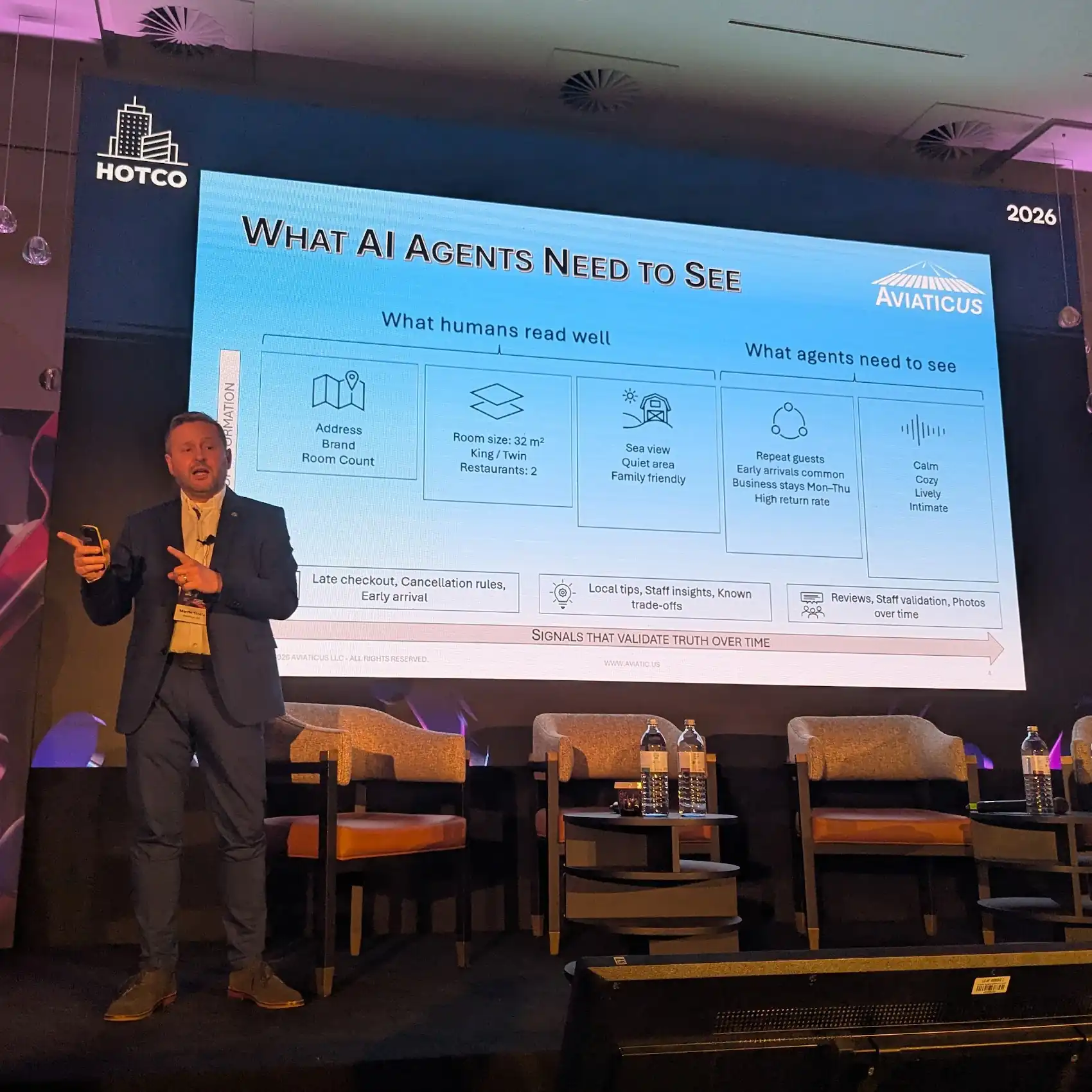
At HOTCO 2026 in Vienna, where I spoke alongside Martin Stolfa from Aviaticus, what stood out was not excitement about AI. It was recognition. Many hoteliers already feel the shift happening.
A useful framing we discussed was this: AI is not really about technology. It is about intelligence.
Not abstract intelligence, but practical intelligence. Your knowledge, your content, your policies, your constraints, your room logic, your pricing truth, your brand promises, your service philosophy.
Agents are just the mechanism. What matters is whether your intelligence is captured, structured, and legible, not only to people, but to machines making decisions on their behalf.
In an agentic world, if your hotel cannot be understood by an agent, it may never even make it into the guest’s consideration set.
Where Readiness Breaks Down
One of the biggest hidden risks right now is uneven readiness.
Within the same hotel group, some teams are experimenting, others are skeptical, and leadership is often not aligned on what actually matters. That leads to fragmented initiatives. Chatbots here, pilots there, lots of motion, very little leverage.
Once you accept that guest relationships are becoming mediated, the implications spread fast. How you describe rooms. How you structure choices. How you communicate trust. How loyalty is earned. How marketing messages translate into machine-readable signals.
This is a posture to adopt. Doing nothing is rarely neutral.
How Smart Hoteliers Can Start
This requires engagement.
Three starting points consistently make a difference:
- Capture and structure your intelligence. Not just content and other data, but the real operational and commercial truth of your hotel, expressed in ways agents can actually use.
- Create a safe space to experiment. An agentic playground where teams can test ideas, learn fast, and build intuition without betting the business.
- Align leadership. Shared clarity on where you are heading cuts through noise and prevents energy from being wasted on what is merely interesting instead of what is strategic.
This is exactly where inHotel is focused. Not on replacing hospitality, but on helping hotels express themselves clearly, consistently, and credibly in an agent-mediated world.
The Agentic Shift Is Underway
The most important takeaway is this: clarity will not arrive fully formed.
Hotels that learn by engaging will build trust, loyalty, and relevance faster than those that wait. The relationship between guests and hotels is changing. What agents mediate is the story.
And for hoteliers who think strategically, that mediation is now a leadership topic, not a future one.
Read more about The Agentic Shift on Aviaticus' blog.
Frequently Asked Questions
What does the shift to agentic hospitality actually change for hotels?
The shift to agentic hospitality changes how guests discover, evaluate, and choose hotels. Instead of guests manually comparing options, AI agents increasingly do this work on their behalf. These agents interpret hotel content, policies, pricing logic, and promises before a human ever engages. For hotels, this means success depends less on flashy interfaces and more on whether their product and services can be accurately understood by machines. Trust, relevance, and loyalty are increasingly formed upstream in agent-mediated interactions, making structured, machine-readable hotel knowledge a strategic priority rather than a future concern.
How are AI agents influencing hotel booking decisions?
AI agents already influence bookings by aggregating information, validating options, and narrowing choices for guests. They interpret room descriptions, cancellation policies, availability rules, and pricing logic across channels. If a hotel’s information is inconsistent, unclear, or incomplete, agents may exclude it without the guest ever knowing. This means booking decisions are often shaped before a guest reaches a website or OTA page. Hotels that structure their operational and commercial truth clearly are more likely to be surfaced, trusted, and recommended by these systems.
Does agentic AI matter more for hospitality than other industries?
Yes. Hospitality is experience-driven. Hotels sell expectations, emotions, and outcomes, not just products. Agentic AI must interpret these experiential promises accurately on behalf of guests. Misrepresentation can lead to mistrust, disappointment, or exclusion from consideration altogether. Because hospitality relies heavily on trust and context, hotels are especially sensitive to how their offerings are represented by machines. This makes agent readiness a strategic issue rather than a technical upgrade.
Is agentic AI mainly a technology investment or a strategic one for hotels?
It is primarily a strategic investment. The core challenge is not deploying new tools, but structuring existing hotel intelligence so it can be understood and trusted by machines. This includes policies, room logic, pricing constraints, brand promises, and service rules. Technology enables this, but the real value comes from aligning how a hotel thinks, operates, and communicates. Without strategic clarity, technology efforts tend to fragment and deliver limited impact.
What kind of hotel information do AI agents need to understand properly?
AI agents rely on practical intelligence rather than marketing language. This includes accurate room descriptions, pricing logic, availability constraints, cancellation policies, service rules, and brand positioning. Agents also interpret consistency across channels. If the same room or policy is described differently in different places, trust erodes. Hotels benefit when this intelligence is captured once, structured clearly, and reused consistently wherever agents evaluate the property.
What risks do hotels face if they ignore agentic AI trends?
The biggest risk is becoming invisible in agent-mediated discovery. If an AI agent cannot interpret a hotel’s offering confidently or it is too generic, it may never present it as an option to the guest. This happens quietly, without feedback. Over time, this can reduce demand, weaken loyalty, and shift control of the guest relationship to intermediaries. Doing nothing is rarely neutral because others are already shaping how agents understand hospitality offerings.
Why are many hotels struggling to get value from AI initiatives?
Many hotels struggle because readiness is uneven. Teams experiment in isolation, leadership lacks shared direction, and initiatives focus on tools rather than intelligence. This leads to pilots that create activity but not leverage. Without alignment on what agent-mediated relationships mean, efforts remain fragmented. Hotels that start with shared clarity and structured intelligence see more meaningful progress.
How can hotels prepare for agent-mediated guest relationships without overspending?
Preparation does not require large upfront investments. Hotels can start by capturing and structuring existing knowledge they already have. Policies, room logic, pricing rules, and service constraints can be documented clearly and consistently. Creating a safe environment to experiment with agents helps teams learn without risking core operations. Strategic alignment often delivers more value than expensive technology rollouts.
How does agentic AI affect hotel trust and loyalty?
Trust and loyalty increasingly form before direct interaction. If an agent repeatedly finds a hotel reliable, consistent, and easy to evaluate, it is more likely to recommend it again. Conversely, unclear or contradictory information erodes trust quickly. Loyalty becomes less about post-stay marketing and more about how well a hotel performs in agent-mediated decision flows over time.
What should hoteliers look for in a solution supporting agentic hospitality?
Hoteliers should look for solutions that focus on structuring hotel intelligence rather than replacing human hospitality. The goal is to make policies, content, and commercial truth machine-readable and consistent. Solutions that support experimentation, align teams, and respect hospitality-specific complexity tend to deliver better outcomes. Some platforms, including those developed by inHotel, are designed with this intelligence-first approach in mind.
Which agents should hotels use to be ready for the agentic hospitality shift?
Hotels should prioritize agents that are compatible with agent-to-agent interaction and built on open standards like A2A, so they can engage with a wide variety of guest agents rather than being locked into a single ecosystem. Just as important, these agents must represent the full reality of the hotel, not only about marketing, but across departments. Readiness now requires surfacing comprehensive truth from revenue management, operations, guest services, and commercial teams, including rooms, policies, pricing logic, constraints, services, and brand promises in a structured, machine-readable way. Agents that focus only on messaging or lead generation fall short in an agent-mediated world. The most future-proof approach are agents that reflect how the hotel actually operates end to end and can engage credibly with diverse guest agents.