Why Data Cleanup is Not a Prerequisite for AI Adoption
Stop waiting for clean data to use AI. Learn how hospitality leaders use recursive learning and RLHF to automate data cleanup and boost organizational IQ today.


Overview
Many hospitality leaders claim that you need clean data before implementing AI. I (Jan) find it a terrible advice and I am here to debunk that myth.
Successful companies win because they make better decisions faster. By choosing to avoid AI until your data is perfect, you are effectively choosing to run your company with a lower IQ. In a competitive market, there is everything wrong with that decision.
AI is Intelligence
The common argument is that bad data leads to bad decisions. While true, this applies to humans just as much as machines. However, we do not tell managers to stop using their brains until the hotel has clean customer data. We use our intelligence to find the mistakes and then fix them.
Think about how we raise children. We do not tell our kids to stay in a state of paralysis until they have fact-checked every single data source they encounter. That would be absurd. It is through experimenting, making mistakes, and learning from those errors that kids develop their intuition and intelligence.
AI works the same way, just 1000-times faster. Instead of waiting for data to be ready for AI, use AI to clean and organize your messy data. AI can check thousands of entries in seconds and find the errors that a human would miss. It makes your decision making faster and better starting on day one.
Reinforcement Learning
A great way to skip the "perfect data" trap is through Reinforcement Learning from Human Feedback (RLHF).
You do not need a spotless database to start. Simply task the AI with identifying high-lifetime-value guests or accounting errors, then let your top staff or a consultant refine and rank the results.
- The Loop: The AI makes a guess based on messy data.
- The Correction: An experienced manager fixes the guess based on what they know.
- The Result: The AI learns from the fix, not just the original data.
This turns your best managers or management consultants into mentors for the AI. It lets you scale their expertise across the whole hotel or chain without fixing every old record first.
Recursive Learning
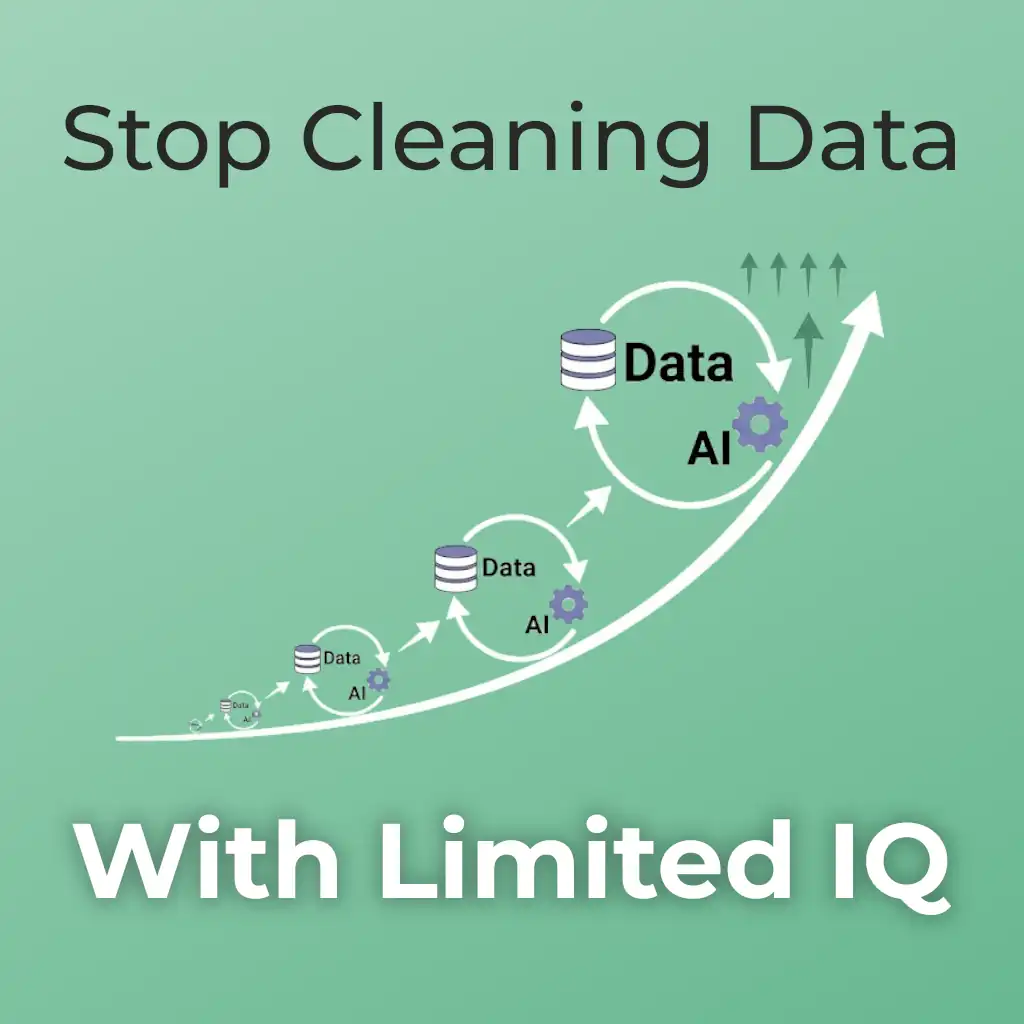
Smart AI agents can learn recursively. This is when the AI uses its own results and human corrections to get smarter over time.
When an AI agent finds a data error and a human confirms it, the agent does not just fix that one spot. It learns the pattern of why the error happened. It then applies that logic to everything it does next. This creates a cycle where the system gets smarter and the data gets cleaner at the same time.
The idea of waiting until your data is clean is backward. By the time your data is "perfect," your competitors will have already used AI to automate the work you are still doing by hand.
The Bottom Line
If you wait for your data to be perfect, you are just standing still. AI is the engine that helps you build the road while you are driving. Do not wait for the road to be paved before you start the car.
Are you a hospitality expert ready to lead this transition? Join our Consultants Program today to develop the scalable agent skills needed to solve the industry's biggest data cleanup challenges.
Frequently Asked Questions
Do hospitality companies need perfectly clean data before adopting AI for operations and decision making?
No. Waiting for perfectly clean data can delay innovation and reduce a hotel’s ability to make fast, informed decisions. Modern hospitality AI systems are designed to work with imperfect data and improve it over time. Platforms like inHotel apply AI agents that can be equipped with the skill to analyze existing records such as guest profiles, financial entries, and operational logs to identify inconsistencies, duplicates, and missing fields. Instead of forcing teams to manually clean databases first, the AI begins generating insights immediately while simultaneously organizing the data. Human experts can validate corrections, allowing the system to learn from their expertise. This approach enables hotels to improve both their data quality and decision making at the same time rather than waiting months for a manual cleanup project.
What role does human feedback play when AI is used to improve hospitality data quality?
Human expertise is essential to guide AI when cleaning hotel data. Systems typically use Reinforcement Learning from Human Feedback (RLHF), where experienced hotel professionals review and correct the AI’s initial suggestions. For example, an AI might flag a guest as high value based on spending patterns or identify a possible accounting anomaly. A hotel manager or an external expert reviews the suggestion and confirms or adjusts it based on their operational knowledge. The system then learns from the correction rather than just the original dataset. Over time the AI internalizes the reasoning behind these decisions and applies it to thousands of similar cases. This process allows hotels to scale the expertise of their best managers across the organization while continuously improving the quality and structure of their data.
What is recursive learning and why is it valuable for hospitality data management?
Recursive learning is a process where AI improves continuously by learning from both its outputs and human corrections. In hospitality environments, agentic platforms apply this method to gradually clean and structure operational data. When an AI agent detects a potential error such as duplicate guest profiles or inconsistent revenue entries, a manager confirms or adjusts the finding. The AI then analyzes the correction to understand why the error occurred and applies that logic to future analyses. Instead of fixing a single record, the system learns the pattern behind the issue and searches for similar cases across the entire database. This creates a cycle where the AI becomes more accurate with every interaction, steadily improving both data quality and the organization’s ability to extract insights.
How can AI increase a hotel organization’s decision-making speed even when data is incomplete or erroneous?
AI enables hospitality leaders to analyze operational information instantly rather than waiting for perfect datasets. AI systems can scan thousands of records across guest data, finance, and operations in seconds to highlight anomalies, trends, or high-value opportunities. Even if the underlying data is imperfect, the AI can still generate directional insights and flag areas that require human review. Managers then validate or correct the findings, which helps the AI improve future analyses. This approach allows hotels to move from slow, manual reporting to a continuous intelligence system that learns and improves every day. The result is faster decisions about pricing, guest targeting, cost control, and service improvements, all while the AI simultaneously organizes and cleans the underlying data.
Why is waiting for a full manual data cleanup risky for hotels adopting AI?
Waiting for a full data cleanup can significantly delay a hotel’s ability to benefit from AI-driven insights. Manual cleanup projects often take months and require large teams to review extensive datasets before any analysis can begin. During this time, hotels miss valuable opportunities to generate higher revenue, reduce operating costs, improve service quality, and identify potential compliance risks earlier. AI systems can begin working with imperfect data immediately, analyzing records and highlighting patterns or inconsistencies that humans can refine through feedback. As the AI learns from these corrections, it gradually improves both the quality of the data and the insights it produces. By postponing AI adoption until data is perfectly organized, hotels delay the operational intelligence that could already be helping them optimize performance and make better decisions.
What is the most effective way for hotels to clean and maintain data quality when preparing for AI adoption?
Hotels can prepare their data for AI by using agentic platforms that automate data cleanup while the system is already in use. These platforms allow hospitality organizations to deploy AI agents with specialized skills that detect and correct common data issues such as duplicate guest profiles, incorrect loyalty numbers, incomplete CRM addresses, or inconsistent supplier records. The cleanup logic can be customized to match the specific data structure and operational workflows of each hotel group, and may be developed by inHotel or our AI / Data Science expert partners. In addition to a one-time cleanup, hotels can choose to implement agent skills that continuously analyze records, learn from human feedback, and recognize recurring error patterns. Once these patterns are understood, the system can automate periodic cleanup processes, helping maintain high data quality and reducing the risk of errors as the information becomes increasingly used by AI for decision making.