All inHotel Agents Go A2A-First with Conversations Dashboard
Hospitality teams need visibility into AI. inHotel unifies all agents under A2A so they collaborate across departments and every conversation stays visible in one place.


Overview
Hospitality operators and industry professionals need visibility and confidence in how AI works across their business. That is why all inHotel agents are now built A2A-first.
We’ve operated hotels, chains, and even larger ecosystems serving a billion users. Based on how these operations actually work, we are convinced that the future of hospitality AI is not single bots solving isolated tasks. It is networks of agents that collaborate across departments and operational workflows. A2A is how we design for that future.
The real problem AI creates in hotels today
AI in hospitality often starts with good intentions but ends up fragmented.
One agent for the website.
Another acting as a concierge.
Another for housekeeping.
Each one works in isolation.
The result is a collection of one-off AIs that do not talk to each other, are hard to oversee, and operate without a shared framework.
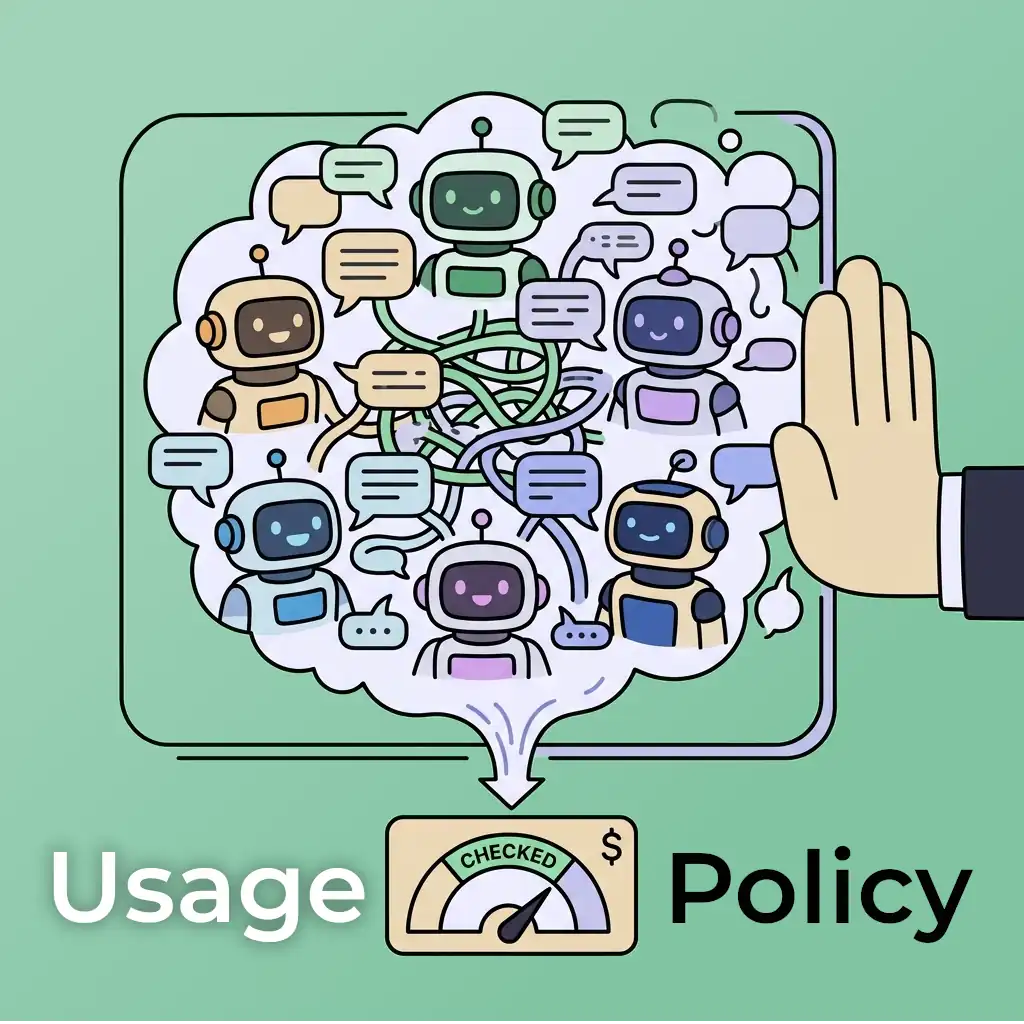
Internally, this creates discomfort. AI is speaking to guests, employees, and systems, but you cannot see everything it says or how decisions connect across departments. You have no consistent way to ground behavior in your standards or align agents to business objectives.
This is simply wrong. You would never design your human organization this way, and agent-based teams are no different.
Why we unified our foundation
Until now, part of our platform still relied on backend infrastructure originally built around four years ago before AI agents existed, for our first hotel website chatbot.
That foundation served its purpose. But as agent collaboration became essential, it limited how clearly old and new systems could work together.
We have now fully deprecated that legacy, non-agent infrastructure. Everything runs on a single, unified A2A architecture designed for agents to collaborate from the start.
This matters because hotels do not solve problems in silos. Marketing, Revenue, Front Office, Housekeeping, and suppliers all interact. Only agents that collaborate across departments can truly support workflows and save time for operators and create amazing guest experiences at scale. That has always been our vision.
Here is a must-read, fun article on this subject from Veronique van der Roer:
From Solo Acts to Symphony: Why Your Hotel Needs an Orchestra, Not a One-Man Band
Introducing the Activity dashboard
With all agents operating through one A2A framework, visibility becomes natural.
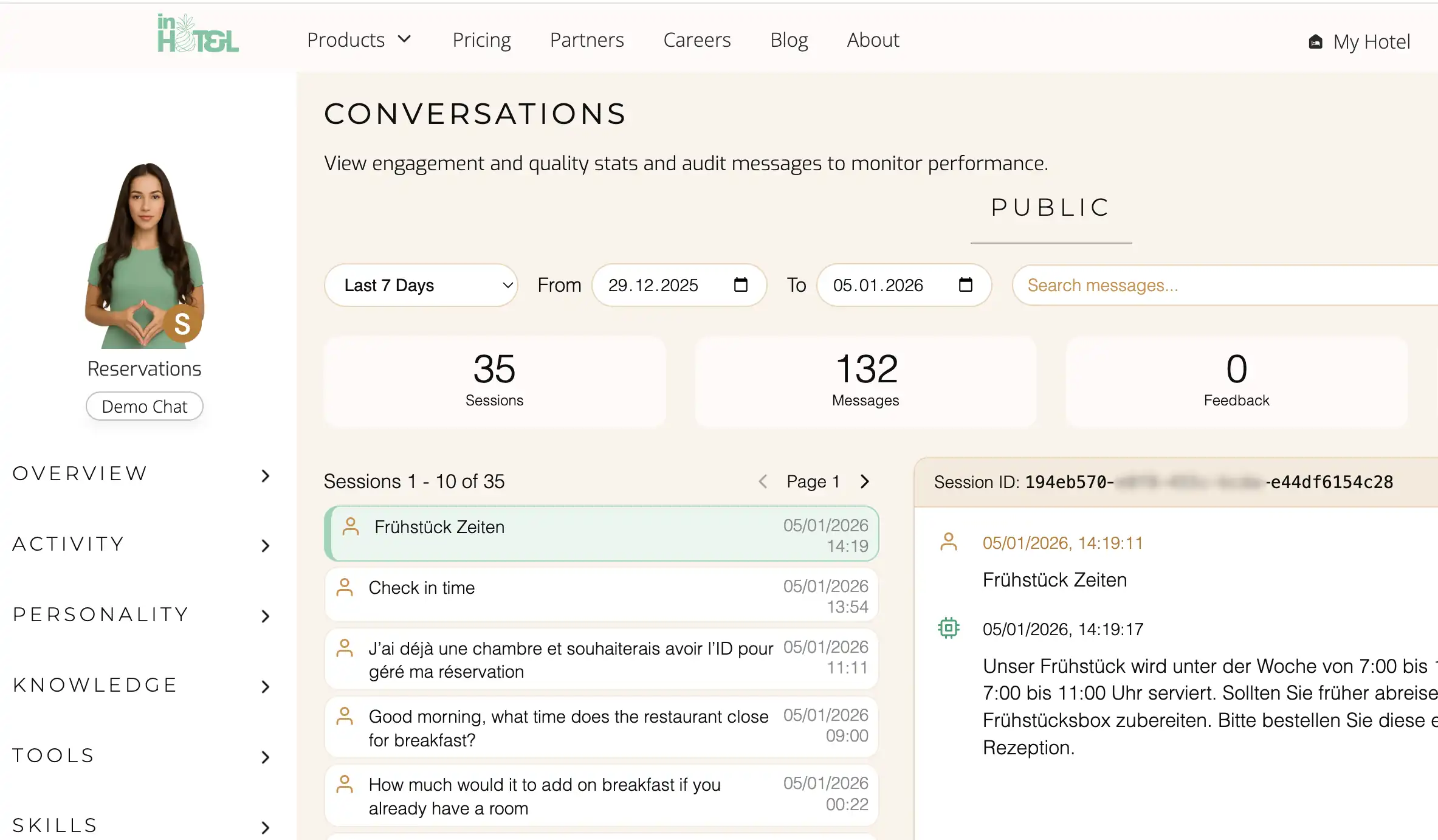
The new Activity dashboard gives you a unified view of conversations across your entire agent ecosystem, including:
- Hospitality assistants
- Partner assistants (consultants, knowledge experts, hotel tech providers)
- AI personas (a.k.a. digital twins)
It covers all conversation types:
- Employee to agent
- Guest to agent
- Agent to agent
- One-to-one and group conversations
In short, if an agent speaks or carries out workflow activity, you can see it in one place.
What this means for you
This change required no action from you. Everything has been migrated transparently.
But choosing AI solutions without a shared agent framework has a cost. Hotels risk ending up with disconnected agents per solution, each solving narrow tasks, none collaborating, and no single place to oversee behavior.
That leads to less trust, more manual oversight, and AI that fails to solve cross-departmental challenges.
With A2A at the center, you can integrate all modern one-off AI solutions and benefit immediately from:
- Full visibility into all agent conversations in one dashboard
- Consistent behavior across agents through a shared framework
- Agents that collaborate across departments instead of operating in isolation
This is how AI moves from isolated automation to coordinated teamwork.
Where to find the Activity dashboard
Navigate to Activity | Conversations in your inHotel portal and explore the insights.
We are doubling down on an agents-first approach because we are building for the future of hospitality operators. A future where AI works as a coordinated team, and where you stay in control through transparency.
Frequently Asked Questions
How can hotels get full visibility into what AI tools say to guests and staff?
Hotels can achieve full visibility by using an AI platform designed around a unified agent framework rather than isolated bots. inHotel’s solution consolidates all AI agents under a single Agent-to-Agent architecture and provides an Activity dashboard where every conversation is visible in one place. This includes guest-facing interactions, employee questions, and even agent-to-agent exchanges. Instead of relying on separate logs or vendor dashboards, hotel operators can review conversations centrally, audit responses, and understand how AI decisions connect across departments. This level of transparency helps build trust in AI while keeping operators firmly in control.
What problems do hotels face when using multiple AI tools that do not work together?
When hotels deploy separate AI tools for reservations, concierge, housekeeping, or revenue, those tools typically operate in isolation. This leads to fragmented behavior, inconsistent responses, and no shared context between departments. Operators also lose oversight because each tool comes with its own interface and limited visibility. inHotel addresses this by allowing all AI agents to collaborate through a shared A2A framework, including the ability to integrate with other hotel tech tools, while giving operators one dashboard to monitor all conversations. This reduces manual oversight and helps AI support real hotel workflows instead of isolated tasks.
How can AI actually help hotels solve cross-departmental challenges?
AI only solves cross-departmental challenges when agents can collaborate instead of working alone. Hotels operate as interconnected systems where marketing, sales, revenue, front office, housekeeping, F&B, and other teams constantly interact. inHotel is built around this reality, enabling agents to share context, hand off tasks, and coordinate actions across departments. This allows AI to support workflows end to end, such as aligning guest communication with operational readiness. Without this collaborative foundation, AI remains limited to narrow automations that rarely save meaningful time for operators.
Is it risky to use AI in hotels without being able to audit conversations?
Yes, deploying AI without full visibility creates operational and reputational risk. If operators cannot see what AI says to guests, employees, or other systems, trust quickly erodes. This is similar to allowing staff to operate without shared policies or oversight. inHotel addresses this risk by giving operators access to all AI conversations through an Activity dashboard. This makes it easier to audit behavior, ensure consistency with hotel standards, and confidently scale AI across the business.
Can hotels integrate multiple AI use cases without losing control?
Yes, but only if the AI platform uses a shared framework. Without that, each new AI use case adds complexity and reduces oversight. inHotel allows hotels to integrate multiple AI agents, including guest-facing assistants, internal staff tools, and partner-driven solutions, while maintaining full visibility through one dashboard. This means hotels can expand their AI usage over time without sacrificing control, consistency, or transparency.
How does an AI activity dashboard help hotel management teams?
An AI activity dashboard gives hotel management teams a real-time and historical view of how their AI agents work across the organization. With inHotel’s Activity dashboard, operators can see conversations involving guests, employees, and agents themselves. This helps management assess performance, identify gaps, and understand how AI contributes to daily operations. Instead of guessing how AI behaves, teams can base decisions on actual interaction data.
What happens if hotels continue adopting one-off AI solutions?
Hotels that continue adopting one-off AI solutions risk ending up with disconnected systems that do not communicate with each other. This leads to more manual oversight, inconsistent guest experiences, and AI that fails to support complex workflows. Over time, the cost of managing these tools often outweighs their benefits. inHotel was designed to prevent this by acting as a unifying layer where different AI capabilities can coexist, collaborate, and remain fully visible to operators.
Where can hotel operators review AI conversations in one place?
Hotel operators can review AI conversations in a centralized Conversations dashboard provided by platforms like inHotel. This dashboard aggregates all interactions across agents and departments, including guest inquiries, staff questions, and internal agent coordination. Having everything in one place allows operators to audit behavior, spot trends, and ensure AI aligns with business objectives. It turns AI from a black box into a transparent operational tool.